
Articles & Essays · 7 min read
Open Source Season: The SCA OAU Edition.
A comprehensive recap of She Code Africa OAU's month-long open-source challenge, breaking down the technical and management sides of contributing to open source through expert sessions.
Written by Mira Lowies · Node #GN-07
First, let’s address the elephant in the room. 🐘
Yes, it is December. Yes, Hacktoberfest’s Contributhon Extended technically ended in October and yes, we are just dropping the recap now. But if you are an OAU student, you know how life works; one minute you are on holiday, relishing your mom’s food and sleeping until 10 AM, and the next minute, you’re back on campus heading to lectures under the scorching sun that makes you wonder if OAU is next to the sun itself! 🥵
So, please forgive the “Nigerian Time.” We had to let the resumption dust settle. 😮💨
But honestly? We couldn’t let this slide without a proper debrief. October was a massive month for the She Code Africa OAU community. We didn’t just host a few webinars, we launched our “Code and Beyond” series, challenged the myths about Open Source, and watched many of you make your very first Pull Requests (PRs).
Since this is our official first blog post (yay us! 🎉), we decided to give you the full tea. Whether you attended every session or you were “busy” (aka sleeping), here is everything you missed from the month of Open Source.
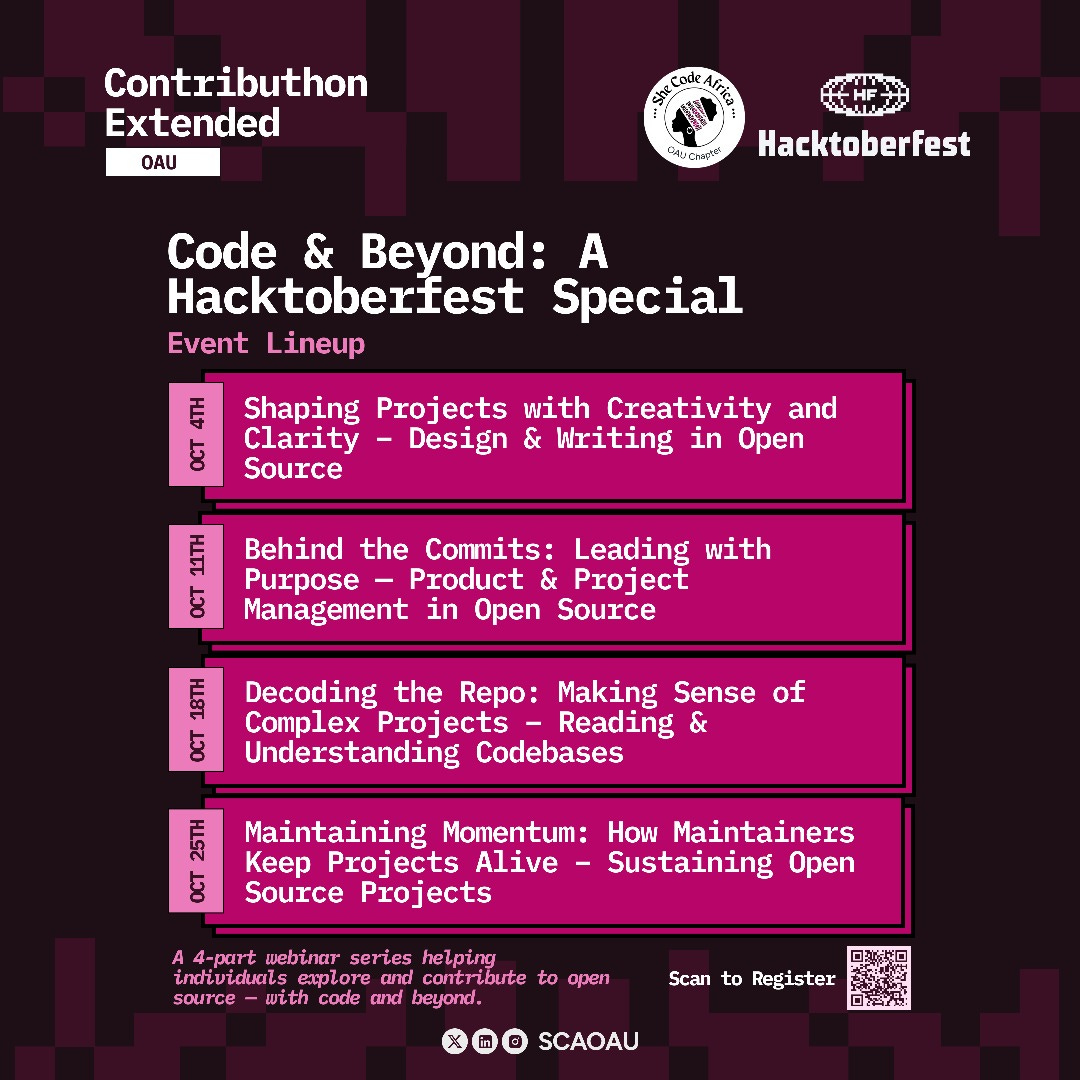
Episode 1: Shaping Projects with Creativity and Clarity. 🎨
We started the month by tackling the biggest lie in the tech industry: that Open Source is only for people who dream in JavaScript and C++.
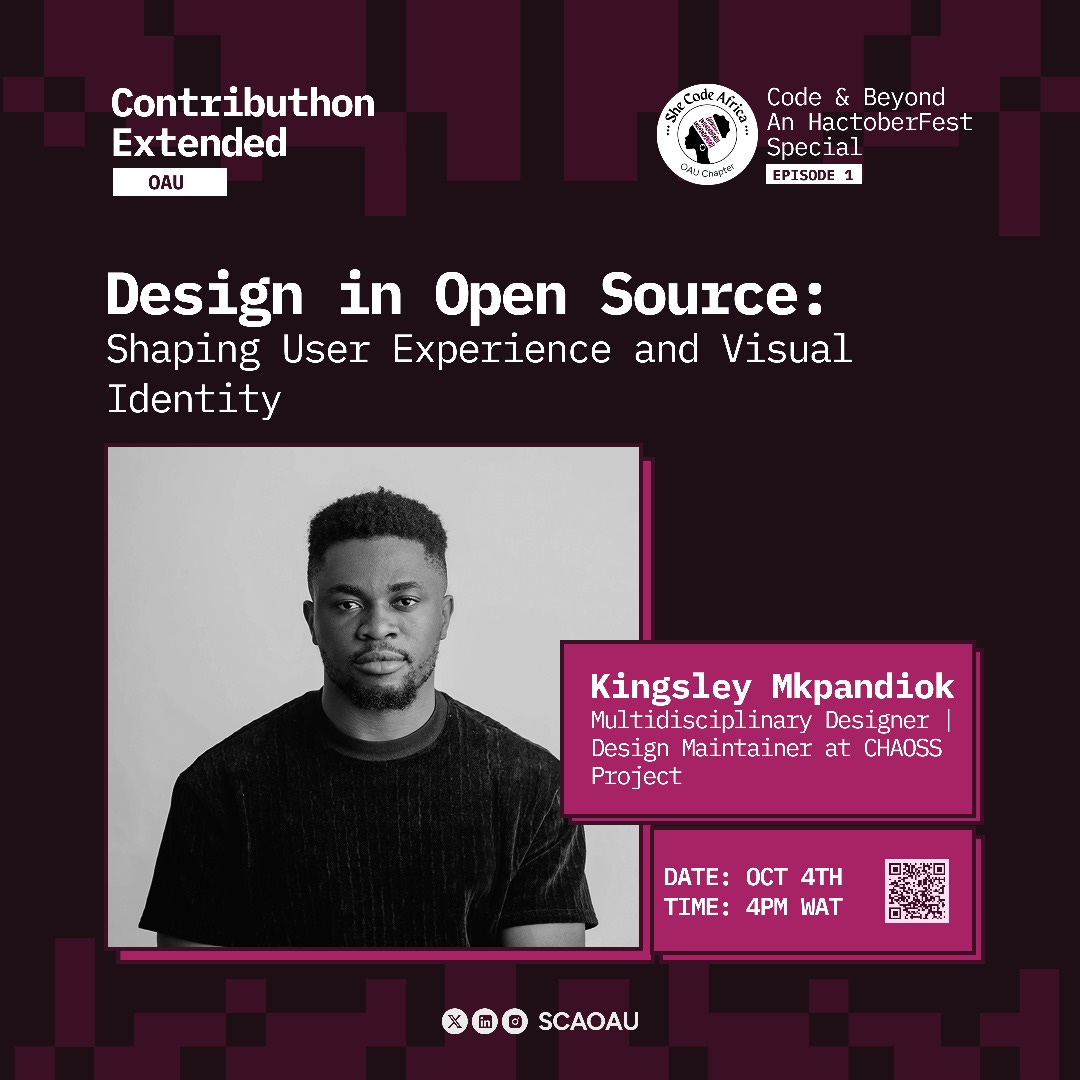
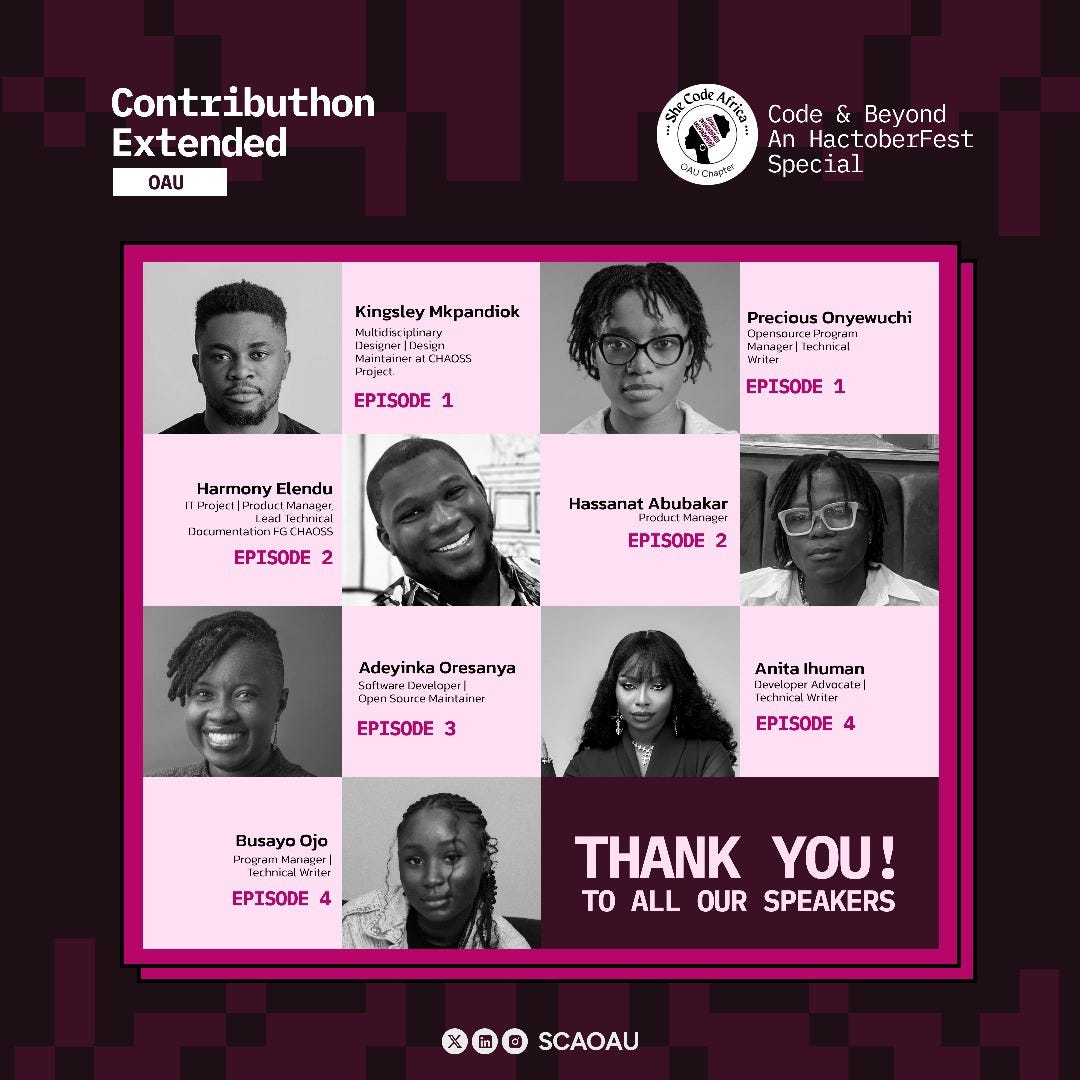
In Episode 1, we brought in Kingsley Mkpandiok, a Design Maintainer for the CHAOSS Project. He blew our minds by showing us the “hidden” side of repositories. He explained that most open-source projects are desperate for Designers —not just for logos, but for people who can use Figma or Adobe Illustrator to solve user problems.
He emphasized that you don’t even need to create a whole new design to start. Simply critiquing a current design or conducting a usability test is a massive contribution.
Key Takeaway: You are more valuable to a dev team than you realize. Contributing isn’t just about pushing code; it’s about identifying problems and improving the experience.
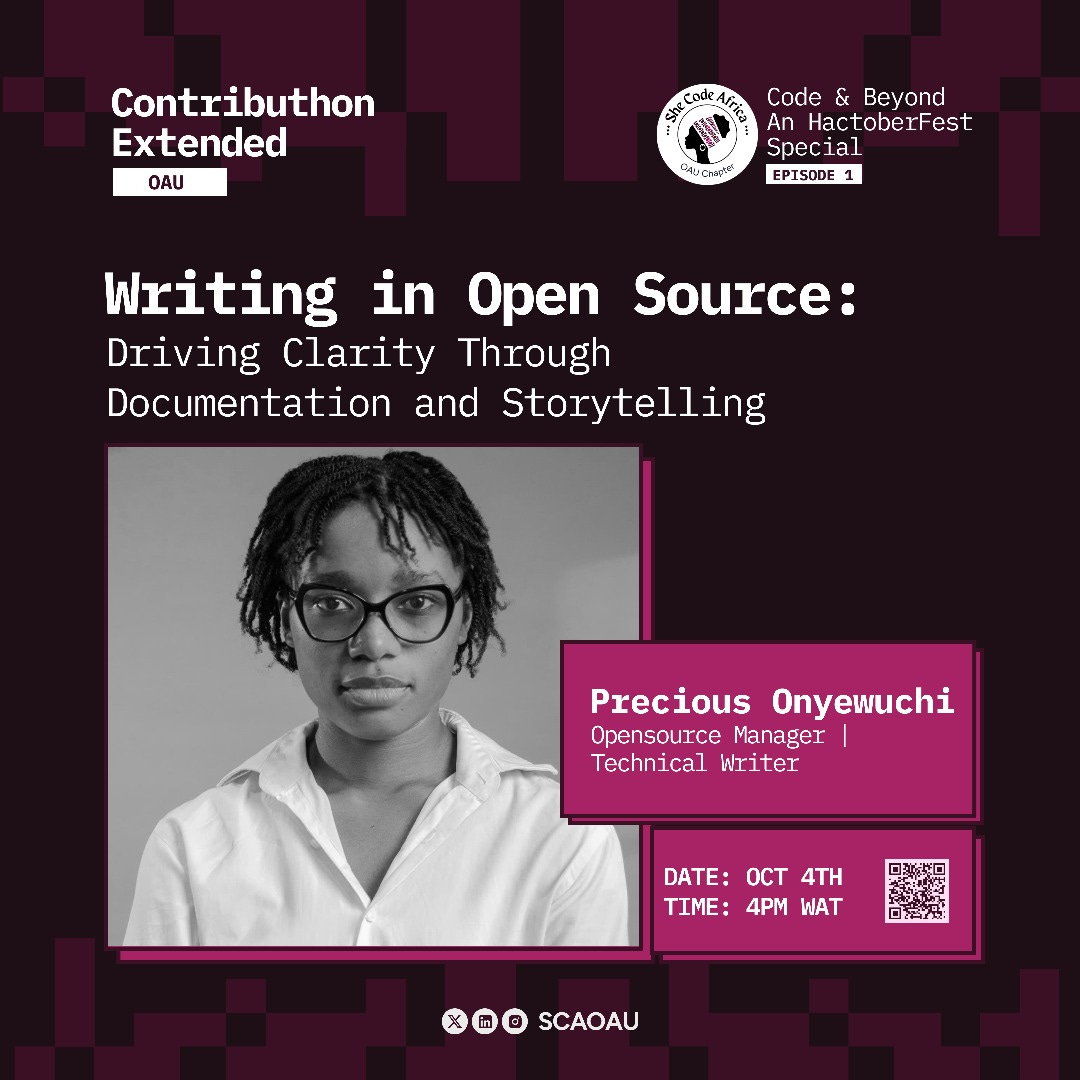
Then, Precious Onyewuchi took over to talk about Technical Writing. Her session was a wake-up call for anyone who thinks docs are boring.
She reminded us that code without documentation is the “entry point” for any contributor—if the docs are bad, the project stalls. Precious didn’t just talk theory; she dropped practical gems, sharing resources like the Google Technical Writing guides and the Diátaxis framework (used in Django documentation) to help us structure our writing better.
Key Takeaway: If you find a typo in a README file or a broken link in a guide, fixing it counts as a contribution. You don’t need to refactor a database to get your name on the contributor list.
Episode 2: Behind the Commits – Leading with Purpose. 🛠️
On October 11th, we moved “behind the commits” to tackle the backbone of any successful project: Management. We learned that while code builds the product, management builds the future.
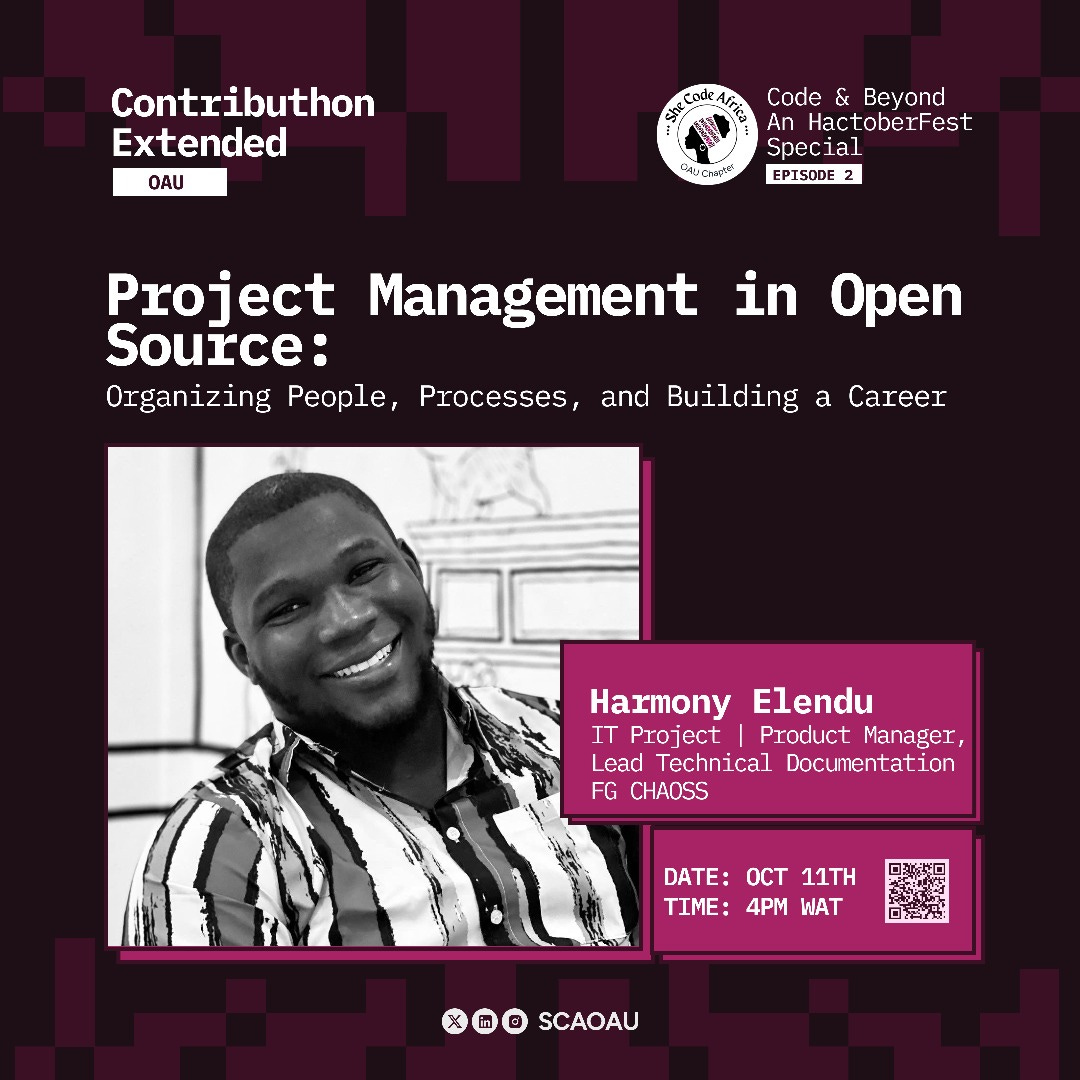
We kicked off the session with Harmony Elendu, a Project Manager at CHAOSS, who broke down the reality of managing Open Source. He emphasized that being a Project Manager in this space is unique because you are managing volunteers, not paid employees. He explained that a PM “wears many hats”—from organizing meetings to ensuring the community is inclusive (DEI) and ensuring that contributors feel valued.
Key Takeaway: Project Management in Open Source is about people management. Your job is to create an environment where volunteers want to contribute their spare time.
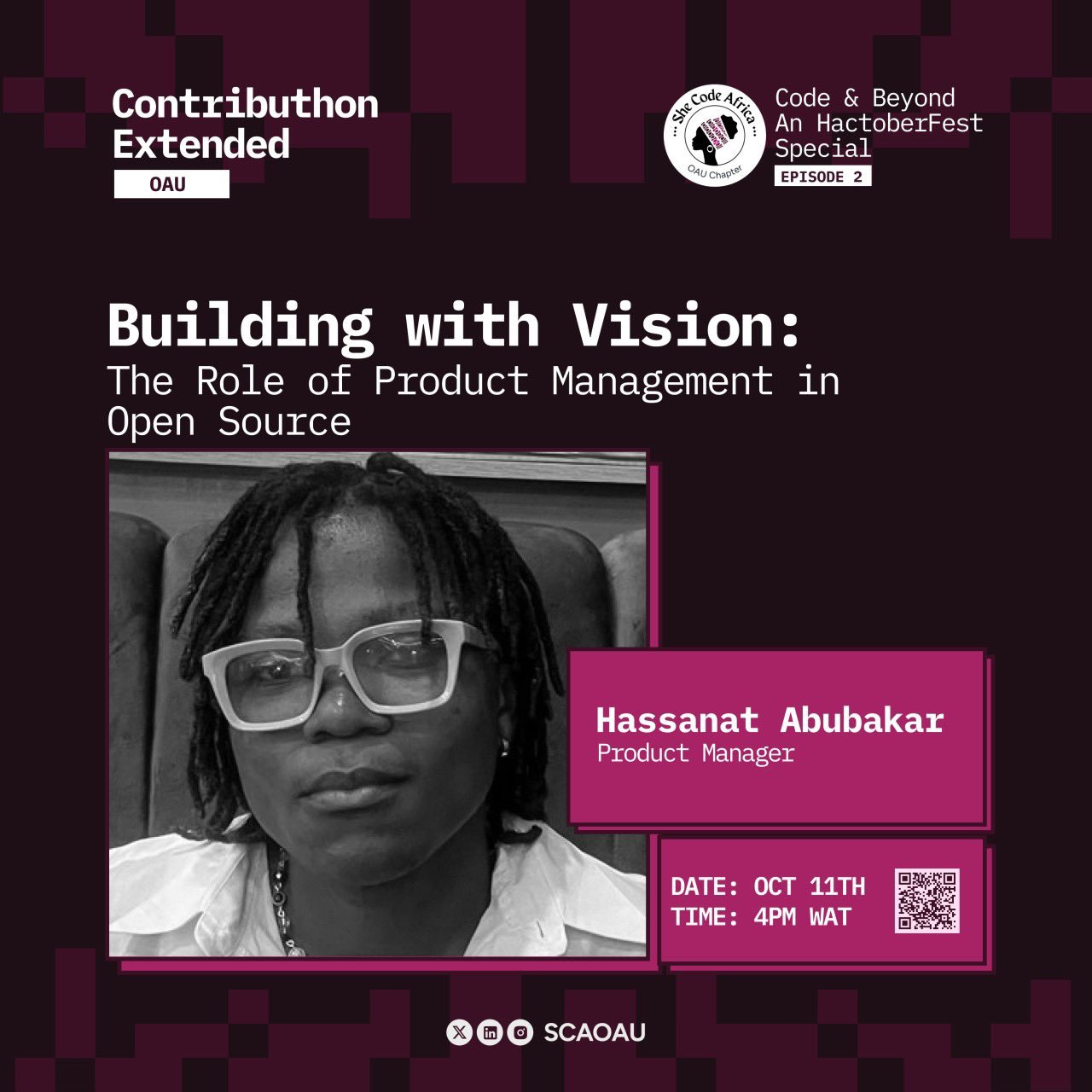
Then, Hassanat Abubakar took over to discuss Product Management. She brought the “Vision.” She explained that without a Product Manager, an open-source project is often just a random collection of code with no direction.
Hassanat showed us how PMs define the strategy, creating roadmaps so that every contribution actually moves the project forward. She also gave us a crash course on tools like Jira, Trello, and GitHub Boards that keep everything organized.
Key Takeaway: You don’t need to write code to steer the ship. By defining the Vision and Strategy, Product Managers ensure that a project solves real problems instead of just existing as a repo.
Episode 3: Decoding the Repo – Making Sense of Complex Projects. 💻
On October 18th, things got technical. Let’s be real, opening a large open-source repository is terrifying. You see 50 folders, 10,000 lines of code, and you just want to log out.
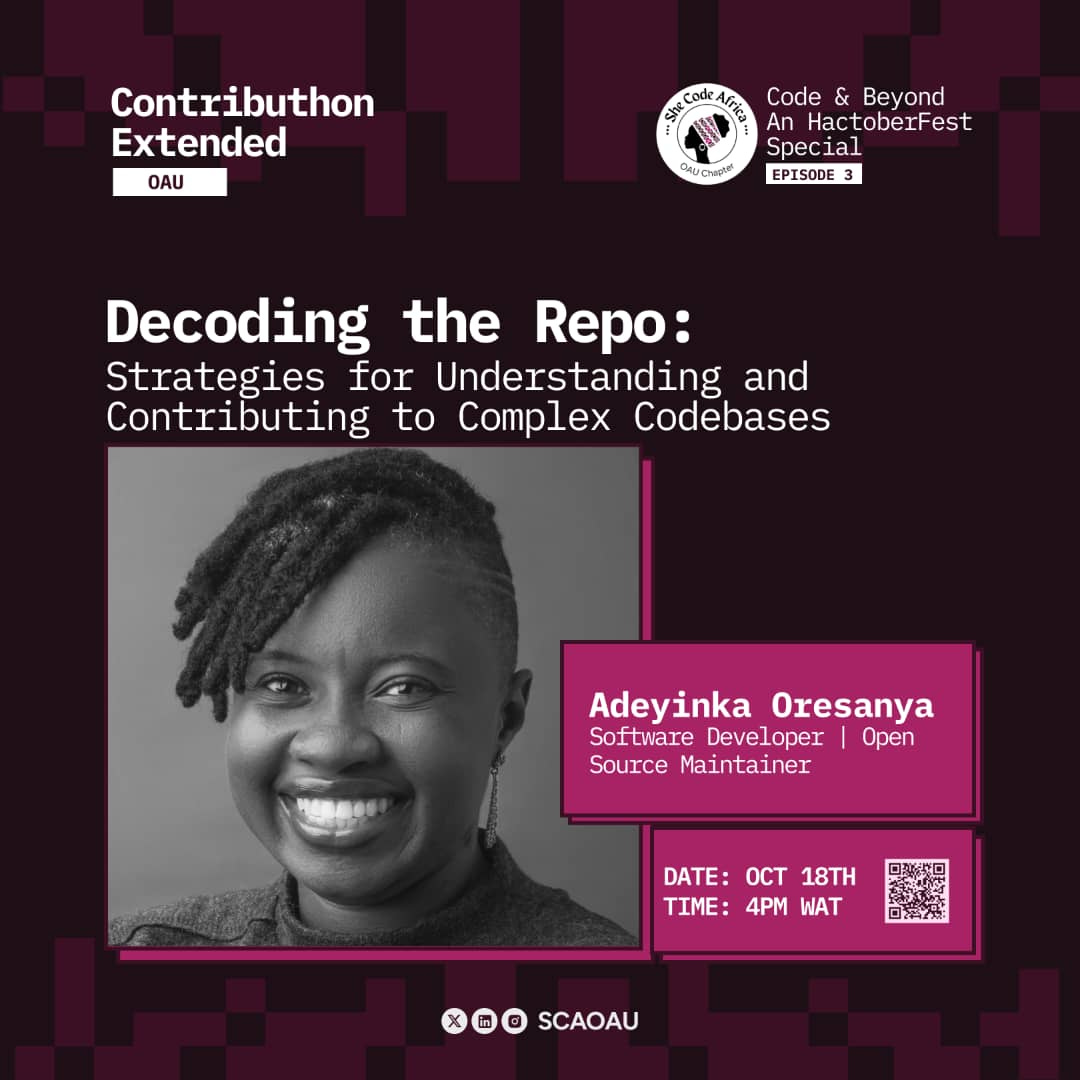
Adeyinka Oresanya, a Software Developer and Maintainer at CHAOSS, joined us to “talk us off the ledge.” She shared a practical strategy for navigating massive codebases without crying.
She advised us to never dive straight into the code. Instead, start with the README and CONTRIBUTING.md files—they are the rulebooks. She also taught us to look for the “entry point” (like index.js or server.js) to trace the flow, and to use tools like git blame to understand the history of a file.
Key Takeaway: Don’t be intimidated by the size of the project. As Adeyinka said, “The number of years of experience is less important than the number of challenges you’ve overcome.” Start small, even if it’s just fixing a typo.
Episode 4: Maintaining Momentum – How Maintainers Keep Projects Alive. ⚖️
On October 25th, we wrapped up the series by shifting our perspective from Contributor to Maintainer. We learned that launching a project is easy, but keeping it alive for the long haul is the real work.
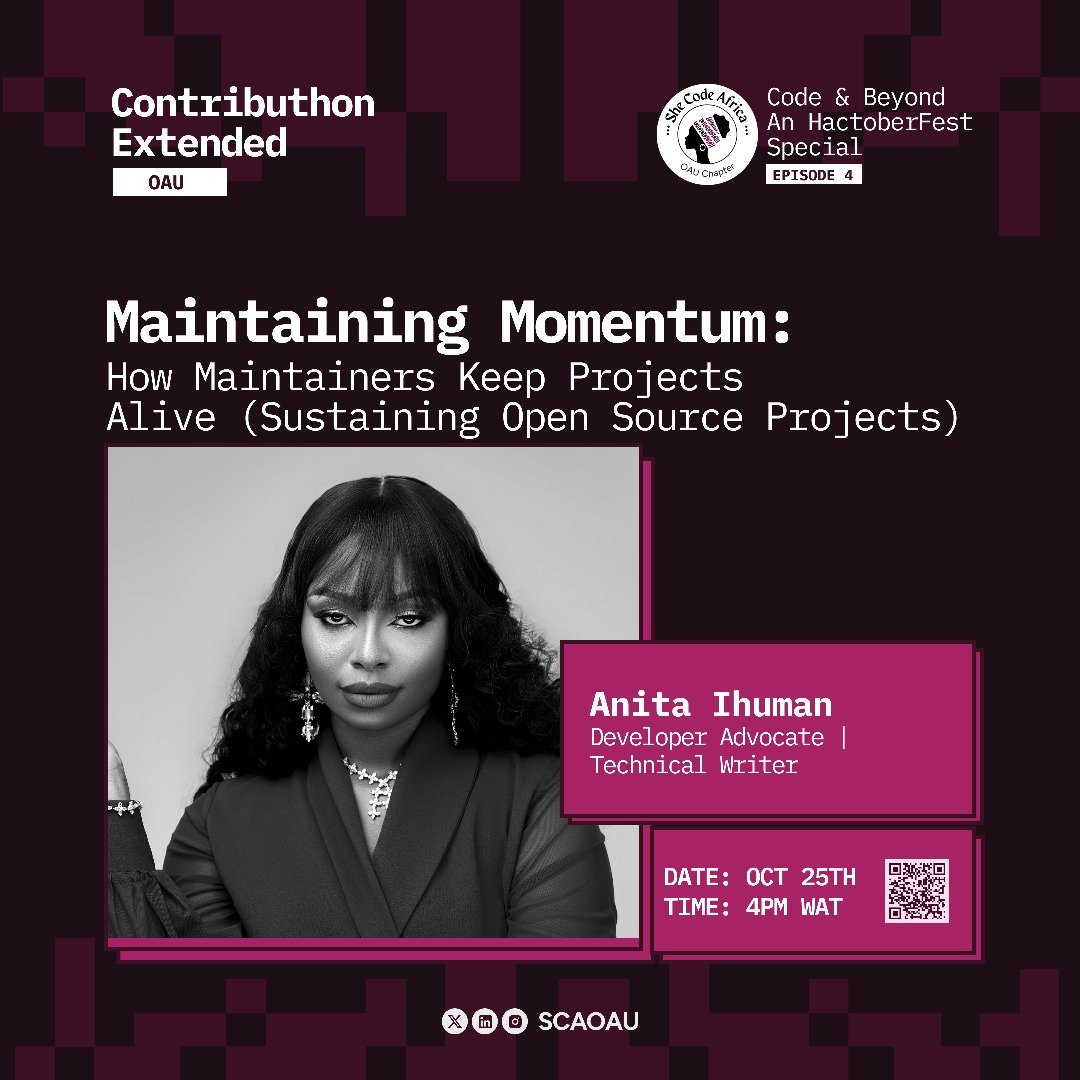
We kicked off with Anita Ihuman, a Developer Advocate, who took us deep into the concept of Sustainability. She explained that projects often die because of “burnout” and a lack of funding. She introduced us to the vital concept of “Tribal Knowledge”—the unwritten rules that exist only in a maintainer’s head. She stressed that if you don’t document this knowledge, the project dies when the maintainer leaves.
Key Takeaway: A sustainable project needs more than just code; it needs processes. Documenting your “Tribal Knowledge” ensures that the project can survive without you.
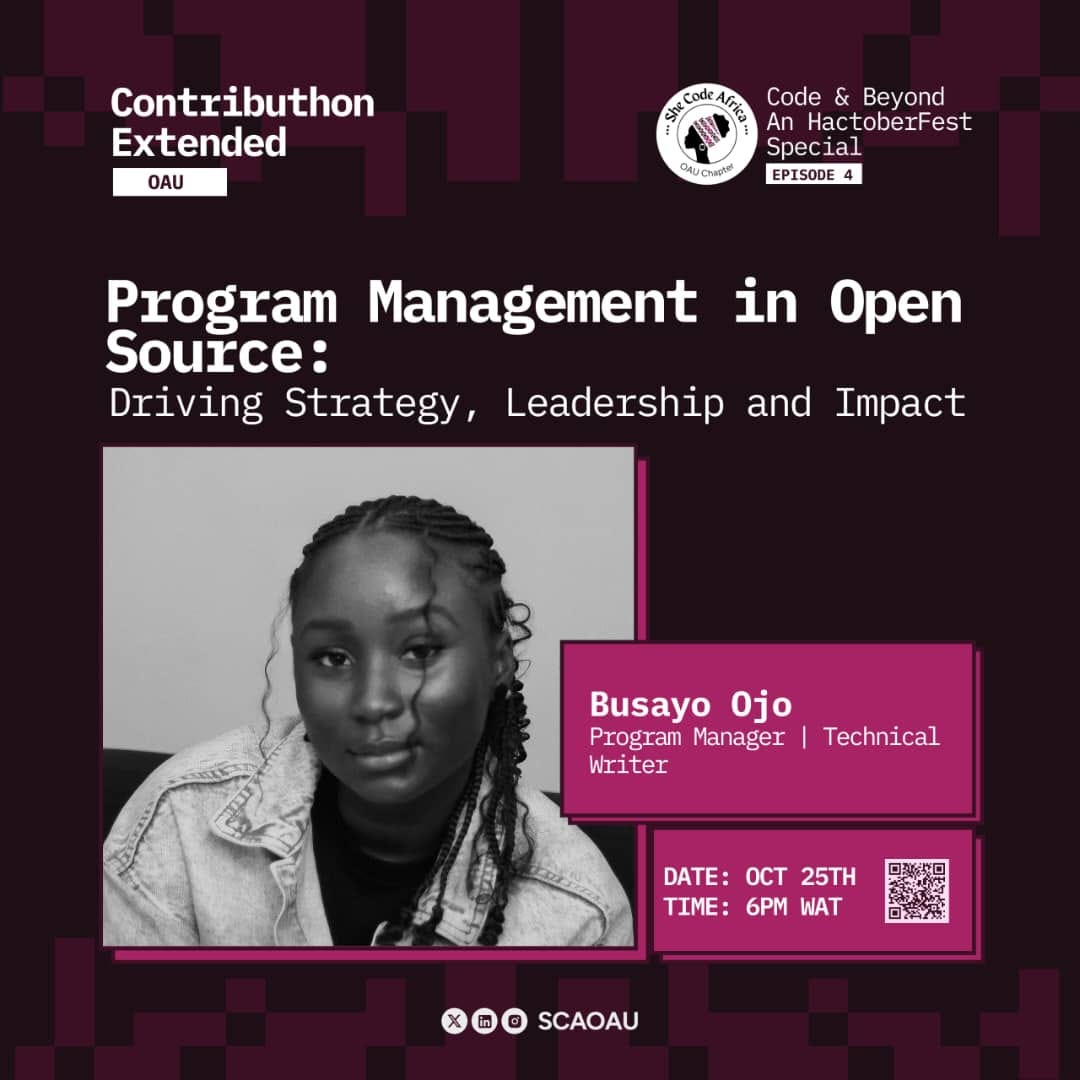
Then, Busayo Ojo took over the screen to discuss Program Management. She focused on the “reward” side of consistency. She opened our eyes to global opportunities like Outreachy and LFX Mentorship, showing us how consistent open-source contributions can bridge the gap between volunteering and a paid career.
Key Takeaway: Open Source is a marathon, not a sprint. If you are consistent with your contributions, programs like Outreachy are waiting to turn that effort into a career.
The Big Lesson: It Takes a Village. 🌍
If there’s one golden thread running through all four episodes, it’s this: Open Source is a team sport, not a solo mission. We learned that code is useless without Design and Documentation, that chaos needs Management, that complex repos just need patience, and that longevity requires Sustainability. You don’t need to be a “10x Engineer” to belong here; you just need to be curious, consistent, and willing to read the README
.
🏆 The Hall of Fame: Celebrating Our Contributors.
Now, for the best part. We didn’t just sit and watch videos, we worked.
The goal of Contributhon wasn’t just to learn about Open Source, but to do it. We challenged you to submit Pull Requests to our repository, and you guys delivered.
We want to give a massive shout-out to everyone who submitted a PR. We know it wasn’t easy. Some of you battled merge conflicts. Some of you had issues with your local environment. Some of you probably stared at a “Failed Check” screen for hours. We are proud of you! Attempting it is the victory.
However, we have to give a special flower to one specific person, The “6 PR” Superstar. While most people were trying to figure out their first commit, this community member locked in and completed ALL 6 Pull Request tasks.
Adekanmi Mojirade, take your flowers! 💐
That level of consistency is exactly the kind of “ginger” we love to see at SCA OAU.
🚀 So, What’s Next?
Now that we are fully back on campus and the holiday dust has settled, the real work begins.
If you made a PR, keep that energy. If you didn’t, the repository is still there. Open Source is a marathon, not a sprint. You can still go back, fork that repo, and make your mark.
Missed the sessions? Don’t worry, we’ve got you covered. The recordings for all four episodes are available.
Also, if you want to be fully equipped and ready to crush the next Hacktoberfest, make sure to join the SCAOAU Opensource Group within our community. That is where all the magic, mentorship, and prep happens.
This is just the beginning for us. We have so much more planned for the semester—more workshops, more gists, and definitely more code.
So, Queens, as we continue navigating this semester, let’s make every moment count. ✨
Thanks for reading! Keep growing and stay awesome. ✨
If you aren’t in our community yet, join us today!
Have a big win to share like Mojirade’s? We want to celebrate you! Share your success story via our Impact Story Form.
Follow SCA OAU on Twitter/X, LinkedIn and Instagram for daily updates!
Want writing like this under your byline?
Mira Lowies is available for commission.